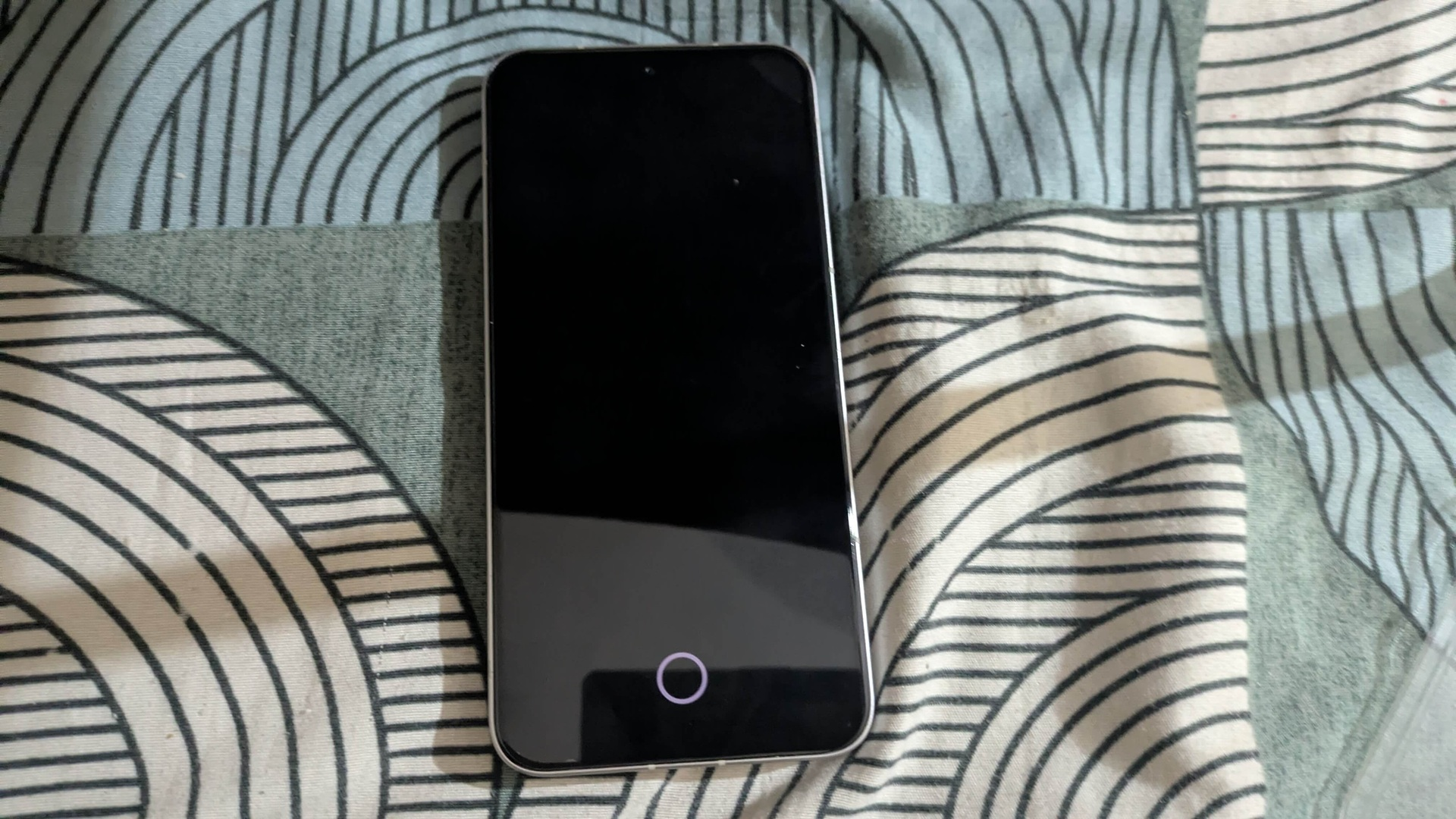
In-Depth POCO F7 Review After 6 Months Of Use: Performance, Camera, Gaming & More
I loved daily driving my Realme GT 2 for the last 3 years. It was a great phone. However, it started showing signs of ageing, mainly due to poor battery backup. Soon after some time, the screen came off the device, and that’s when getting the device checked/repaired was no longer optional.

I contacted the customer service centre, and they informed me that “I would have to leave my phone at the service centre for a week,” with no replacement or spare phone provided in the meantime.
Long story short, I had no spare phone, so I decided to buy a new one.
Here was my thought process while selecting the phone:
- My phone needed to have 12GB RAM & 512GB storage.
- It needed to be under ₹30,000.
- The processor should not be more than two generations old and should have some AI-centric capabilities (NPU).
- A good camera would be great, but it’s not a priority for me.
- At least 60W fast charging speed (Can’t live without now).
Long story short, POCO F7 really ticked off most of the checkboxes on my list. So, I ended up buying the POCO F7 (White colour, 12GB RAM + 512GB storage variant).
After using it for more than six months, I have some thoughts that I want to share. That’s why I decided to write this in-depth POCO F7 review. In this guide, I will be talking about the build quality, software, gaming performance, and my overall experience with the device.
POCO F7 Review Specs
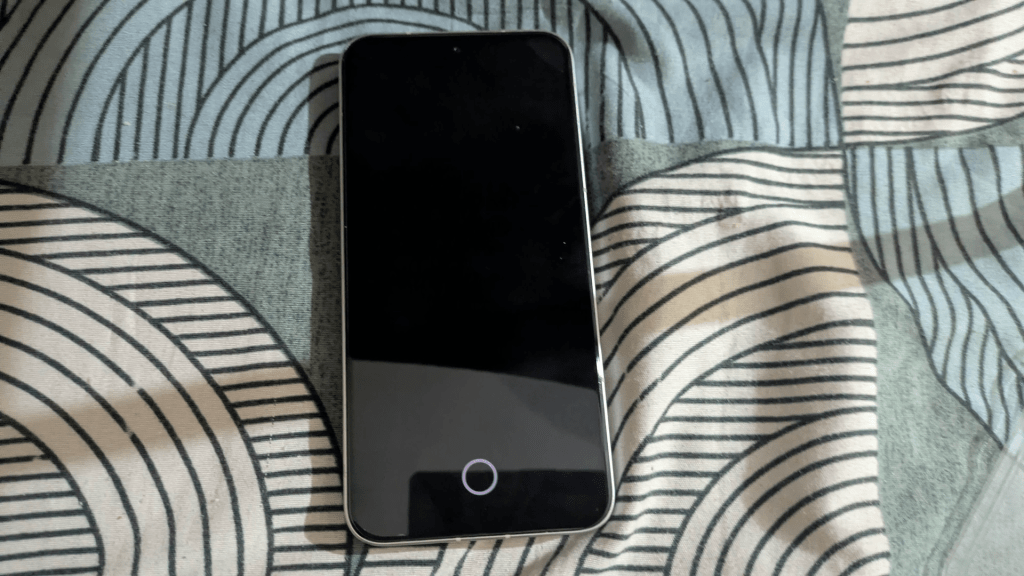
Here is a quick POCO F7 specs list, just in case you are confirming or looking for something specific.
| Aspects | Specs |
|---|---|
| POCO F7 Release Date | Not officially mentioned in the provided specs |
| POCO F7 Weight | 215.7 g |
| POCO F7 Water resistance | Yes, IP68 (dust & water resistant) |
| POCO F7 Display | 6.83-inch 1.5K AMOLED display |
| POCO F7 Gorilla Glass | Corning® Gorilla® Glass 7i |
| POCO F7 Refresh rate | Up to 120Hz |
| POCO F7 Processor | Snapdragon® 8s Gen 4 (TSMC 4nm) |
| POCO F7 GPU | Adreno 825 |
| POCO F7 Android version | Xiaomi HyperOS 2 |
| POCO F7 Dimensions | 163.1 × 77.9 × 8.2 mm |
| POCO F7 Speakers | Dolby Atmos-certified dual speakers |
| POCO F7 Fingerprint sensor | In-screen fingerprint sensor |
| POCO F7 Wireless charging | No |
| POCO F7 Storage type | UFS 4.1 |
| POCO F7 Updates | 4 OS updates & 6 years of security updates |
| POCO F7 Camera | 50MP Sony IMX882 + 8MP ultra-wide |
| POCO F7 Cooling | 6000mm² 3D dual-channel IceLoop cooling |
| POCO F7 IR blaster | Yes |
POCO F7 Build Quality Review: Feels Okayish!
This is not a flagship, so I went in expecting a mid-range device in-hand feel.
However, I was pleasantly surprised by the overall in-hand feel of the device. Holding gadgets like these, sometimes I wish I had the money to use them without any protective case.

POCO F7’s aluminium chassis felt like a treat to hold in my hand, and the plastic back had a good feel too.
However, I was not completely satisfied with the experience, mostly because of the weight. POCO F7 comes with a massive 7000mAh battery and a large 6.83-inch display, making it bulky.
It took me some time to get used to the device’s weight. I had specifically purchased a rugged case to protect the camera lens from external contact in my pocket or on the table, but I had to remove it because my in-hand experience became worse after installation.
That’s why, I reverted to the free rubber case that came with the phone, as it didn’t add any significant weight to the device. I found long gaming or video-watching sessions to be more enjoyable with lighter cases.
POCO F7 is water-resistant with an impressive IP68 rating. I live alone, and sometimes I like having a random podcast or web series playing on my phone while doing the dishes; IP68 gives me peace of mind in such situations.

POCO F7 Build Pros & Cons
Pros
Loved the in-hand feel of the aluminium chassis
Good for long gaming and video-watching sessions
The IP68 rating makes it great for long-term durability
Cons
Installing heavy cases makes the in-hand feel worse
Not for anyone who prefers compact or lightweight phones
Build Quality: 8/10
POCO F7 Review: Community, UI, & Software (Rant)
One of the things that I loved about my Realme GT 2 was Realme UI. It has come a long way and is quite polished in terms of features and overall performance.
To be honest, I went with the POCO F7 with neutral thoughts, as someone who has used Redmi 1S, Redmi Note 3, and Redmi Note 4.
At that time, unlocking the bootloader was easy; the XDA and MI communities were booming. However, that no longer seems to be the case, and I had the same problem with the Realme community as well.
Weirdly enough, the POCO community app is not available in India. The MI Community/Store can be used for service and spare parts, but not for accessing the POCO community. Moreover, the browser-only experience of the POCO community was clunky and not intuitive.
Tech-nerd conversations and communities are dying or have consolidated onto Pixel or some other ecosystem.
Xiaomi recently announced that it will be merging POCO back into Xiaomi, and it will no longer be a separate, independent brand. Maybe the current state of affairs can be blamed on that.
Enough dwelling on the nerdvana, as let’s face it, its presence or lack thereof doesn’t affect the experience of most end users in any way.
In terms of UI, HyperOS felt very different and seemed like it was really trying to go for a stock Android–ish feel, with advanced features tucked away. This seems to be a modern trend for Chinese brands these days, and I am all for it.
So, standard features like Dual Apps, App Lock, network speed monitoring, Game Toolbox, AOD, and other features are available on the device.
It also has the Xiaomi app for interconnectivity, which is similar to the Microsoft Phone Companion app, syncing notifications, messages, and calls across a variety of devices.
Like all Android phones these days, heading towards standardisation (I have mixed feelings about this), it features Google Dialer and Google Messages as default apps.
Pesky Bugs
While testing the POCO F7 for review over the last 3 months, HyperOS was good for the most part.
However, it had two major bugs that annoyed me. The first was the brightness slider not responding at random times while using Netflix and sometimes while gaming at night.
The second major bug was the recent apps screen getting stuck while using Nova Launcher.
I can consider the brightness bug to be a Netflix app issue, but I have yet to have a consistently good experience with third-party launchers on modern UIs. I remember having a similar issue with Realme UI and submitting a bug report. The issue was fixed and then broken again after one or two updates.
Other than these issues, overall, I love HyperOS on the POCO F7 powered by Android 15. It never randomly froze, lagged, or stuttered in my last 3 months of use and offers pretty good features overall.
Software: 7.5/10
POCO F7 Advanced Charging & Battery Management Features

Everyone talks about how Chinese brands take inspiration and design cues from iOS. To be honest, I don’t have an opinion about it one way or the other.
However, one feature that I always wanted Android to copy was the battery charging limit. Thankfully, it is now being implemented across most major Android brands, including POCO F7.
You can choose between standard and fast charging speeds. If you are worried about 90W fast charging affecting battery longevity, you can disable it.
- You can set the charging limit to 80%.
- You can track battery health and charging cycles.

A single charge can conveniently give me 9 to 11 hours of usage. On heavy usage with an hour of Genshin Impact or COD, it gives 7 to 8 hours of SOT.
Given that I upgraded to POCO F7 because of battery issues, this is a welcome change. Realme also rolled out an 80% charging limit feature during its last update, but it was too late for my device.
I’m happy to see modern Android devices implementing these features. It would be great if we could simply order spare parts from the Xiaomi Store online in the future and get the battery replaced at an authorised service centre.
Currently, you submit your phone, they order a replacement battery, and the entire process takes at least a week. Plus, you don’t get a spare phone in most, if not all, cases.

Battery Life: 9/10
POCO F7 Camera Review: Good for Casual Images
I needed an average camera that could get the job done and take decent photos and videos whenever I wanted.
In terms of camera performance, it is certainly a downgrade compared to my Realme GT 2. POCO F7 features a primary Sony IMX882 sensor (50MP, smaller 1/1.95″ sensor size) and a 20MP OV20B sensor from OmniVision.
I found it decent enough while clicking pictures in well-lit conditions. However, the camera struggled to take images in low-light conditions or when your hands were a little shaky. The images are good enough for me, but they might not get the job done if you are a photography enthusiast.
During my POCO F7 review, I did find the camera capable of capturing some exceptional portrait images and decent dynamic range.


Score: 6.5/10
Here are some POCO F7 image and video samples. Once again, apologies, as I am not great at photography.
POCO F7 Gaming Review
I love playing Genshin Impact these days; I am very much into it. So much so that I have written a beginner’s artifact guide for Genshin Impact and a guide on how to get free characters in Genshin Impact.
That’s why I was really excited for this POCO F7 review when it came to gaming. Performance was phenomenal on low and medium settings, which is how I usually play, as Genshin can be a battery drain.
Moreover, other occasional games that I play, like Wuthering Waves and Call of Duty, also performed well. I experienced occasional heating when charging and playing simultaneously, but that’s expected behaviour.
Emulation games via apps like RetroArch and AetherSX2 worked well too. For gamers, POCO F7 is a great deal.
It is to note that the latest HyperOS 3 update with Android 16 reduced/limited the ability to utilise RAM by third-party apps to 4GB. This has severely hampered the mobile emulation capability in heavy 3D games.
The phone comes with a standard gaming toolbox that lets you change your voice in games like COD and optimise performance, but I rarely needed to use it.
One thing I would like to mention is that the jury is still out on heating issues, as North Indian summers are brutal and most phones get really hot here. So, I wouldn’t be surprised if the phone shows heating issues during peak summer.
Games I Play
There were never any frame drops, pixel tearing, or lag in the various games I tested. Here are the games I have installed on my phone:
- ARK Survivor- How I Play- Works well in medium settings with minimal00 heating
- BGMI- How I Play– Works well in medium settings with minimal heating
- Brawl Stars- How I Play– Cranked up settings to high, minimal heating, as this is a less demanding game.
- Bullet Echo- How I Play– Cranked up settings to high, minimal heating, as this is a less demanding game.
- Call of Duty- How I Play– Works well in medium & high settings with minimal heating
- Genshin Impact – How I Play– Works well in medium settings with minimal heating
- GRID Autosports- How I Play– Works well in medium settings with minimal heating
- Hungry Shark- How I Play– Cranked up settings to high, minimal heating, as this is a less demanding game.
- Minecraft- How I Play– Works well in medium settings with minimal heating
- Mobile Legends- How I Play– Works well in medium settings with minimal heating
- Plants Vs Zombies- How I Play– Cranked up settings to high, minimal heating, as this is a less demanding game.
- Pokemon Go- How I Play– Cranked up settings to high, minimal heating, as this is a less demanding game.
- AetherSX2-How I Play– Works well in medium settings with minimal heating
- Polytopia- How I Play– Cranked up settings to high, minimal heating, as this is a less demanding game.
- RetroArch- How I Play– Cranked up settings to high, minimal heating, as this is a less demanding game.
- Roblox- How I Play– Cranked up settings to high, minimal heating, as this is a less demanding game.
- Wuthering Waves– How I Play- Works well in medium settings with minimal heating
Score: 9.5/10
Final Thoughts On My Poco F7 Review
Without a doubt, Poco F7 is a great device if you are a gamer or just want a device that doesn’t lag.
However, it is not great if you prefer small or light devices. It is also not great if you want to phone to take good pictures.
What makes the Poco F7 great is its performance, massive battery, quick charging that comes with it, and Hyper OS with lots of customisation, at an unbeatable price.
Should you buy it?
Yes, if you are a gamer or heavily customise your widgets with launchers, then without Poco F7 is the device you should consider going for.
FAQs
What is the price of POCO F7?
Without any discounts, sales, or special offers, the POCO F7 is priced at ₹33,999 in India.
Is the POCO F7 a 5G phone?
Yes, the POCO F7 supports 15 5G bands, making it fully future-proof. It maintains strong signals even in low-coverage areas like basements through low-frequency bands, and can hit speeds of 1Gbps+ on high-frequency ones. It’s fully compatible with Jio, Airtel, and Vi, built to handle India’s fastest networks with ease.
When was the POCO F7 launched?
The POCO F7 was launched on June 24, 2025.
Is the POCO F7 good for gaming?
Absolutely. The Snapdragon 8s Gen 4 chipset paired with excellent haptic feedback makes for a smooth, immersive gaming experience. In testing, the POCO F7 handled PS2 emulation, Genshin Impact, Wuthering Waves, and Call of Duty Mobile without any issues.
What is the battery life of the POCO F7?
Battery life varies by usage. On heavy use, expect around 7–8 hours of screen-on time; on lighter tasks, it can stretch to 9–10 hours. Overall, it’s a reliable all-day performer for most users.
Does the POCO F7 overheat?
The phone only got occasionally warm during extended gaming sessions or while charging simultaneously, nothing alarming. That said, performance under peak Indian summer conditions is yet to be fully tested.
How fast is the POCO F7’s charging?
The POCO F7 supports 90W fast charging, taking the battery from 0 to around 80% in approximately 45 minutes.
How long does the POCO F7 battery last?
It depends heavily on what you’re doing. Demanding games like Genshin Impact bring the screen-on time down to around 4–6 hours, while regular everyday use comfortably delivers 6–8 hours on a single charge.
How many years of software updates does the POCO F7 get?
The POCO F7 is backed by 4 major Android OS updates and 6 years of security patches, solid long-term support for its price range. In 2026, it is already running Android 16 with the latest HyperOS 3.
Does the POCO F7 have the Google Play Store?
Yes, the Indian variant comes with the Google Play Store pre-installed. The Chinese market equivalent, sold as the Redmi Turbo 4, does not include Google services, but there is no dedicated Chinese variant of the POCO F7 itself.
Can POCO phones use Google services?
Yes. Global, European, and Indian variants of POCO phones come with the Google Play Store and all standard Google services pre-installed right out of the box.

Leave a Reply